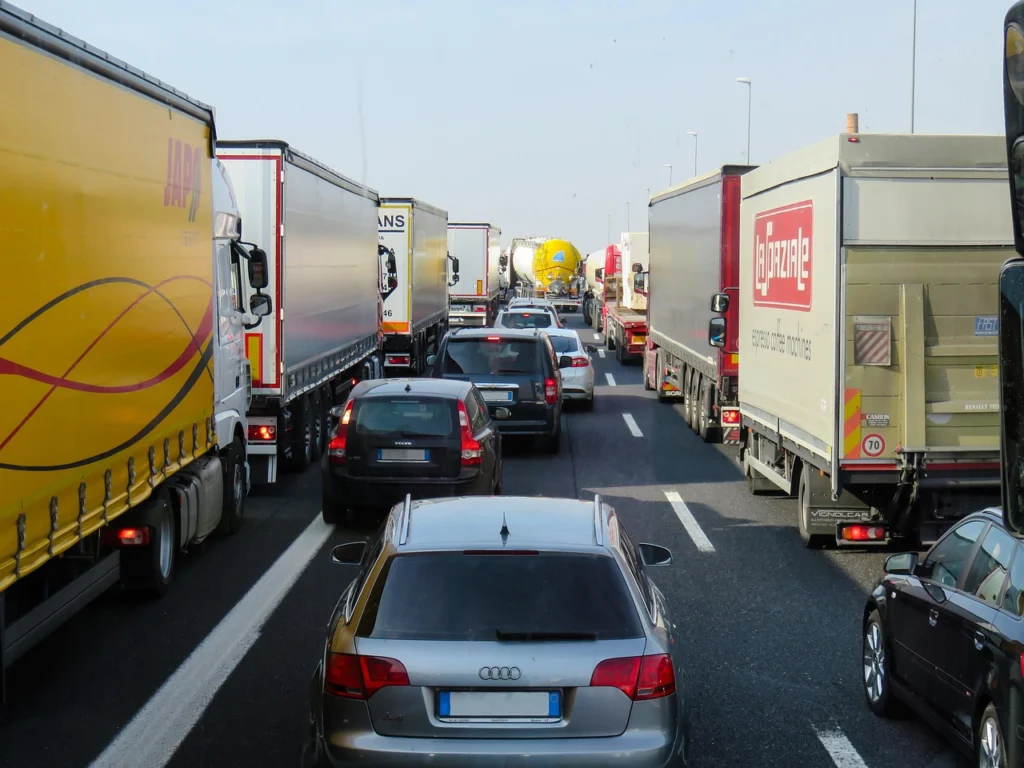
Short answer: Truck accident settlements differ from car accidents mainly because commercial trucks involve larger insurance policies, multiple liable parties, and more severe injuries. This often leads to higher settlement amounts and more complex negotiations. Car accidents typically involve simpler liability and lower policy limits, resulting in smaller, faster settlements.
Key takeaways
- Truck accidents often involve multiple liable parties, including the driver and trucking company.
- Commercial truck policies carry higher limits, allowing larger settlements.
- Injuries from truck crashes are usually more severe, driving up damages.
- Faster settlement requests but slower negotiations due to complex investigations.
- Arizona law requires specific filing deadlines that differ for claims.
- A skilled attorney can help navigate the complexity.
What you will find here
- What Makes a Truck Accident Claim Different from a Car Accident Claim?
- Liability: One Driver vs. Multiple Parties
- Insurance Coverage Limits: A Big Factor in Settlement Differences
- Severity of Injuries and Damages
- The Claims and Evidence Process: More Complex
- Federal and State Regulations in Arizona
- Settlement Values: Car vs. Truck Cases
- Negotiation and Legal Strategy
- Common Mistakes That Hurt Your Settlement
- How Long Does a Truck Accident Settlement Take?
- Practical Takeaways for Truck Accident Victims
If you’ve been in an accident, one of the first questions you might have is: how much is my case worth? The answer often depends on whether you were hit by a passenger car or a commercial truck. Truck accident settlement differences are not just about the size of the vehicle—they’re about the scale of liability, insurance, and damages. In this guide, I’ll walk you through the practical differences that affect your settlement.
What Makes a Truck Accident Claim Different from a Car Accident Claim?
At first glance, a crash is a crash. But legally and practically, truck accidents involve much more than just your medical bills and repair costs. Commercial trucks are regulated by federal and state laws, and the companies that own them carry a lot of insurance. That means the claims process is far from straightforward.
In a typical car accident, you’re dealing with one driver and their insurance company. In a truck accident, you could be dealing with the driver, the trucking company, the company that loaded the cargo, and even the manufacturer of the truck or its parts. Each of these parties might have a piece of the liability, and each has its own policy that may apply.
Liability: One Driver vs. Multiple Parties
In most car accidents, liability is straightforward: the at-fault driver is responsible. But truck accidents often involve several layers of potential liability.
The Truck Driver
The driver is usually the first person you’d look at. If they ran a red light, were speeding, or were distracted, they’re clearly at fault. But their personal liability is often limited by what their employer’s insurance covers.
The Trucking Company
Even if the driver was negligent, the trucking company can be held liable under a legal doctrine called respondeat superior. That means they’re responsible for the actions of their employees while on the job. But it goes further: the company can also be directly liable if they failed to properly train the driver, maintain the truck, or follow hours-of-service rules.
Trucking companies are also required to carry higher insurance minimums than regular drivers. A single commercial trucker needs at least $750,000 in coverage, while a passenger car driver might only have the state minimum of $25,000 or $50,000. This is a huge difference in settlement potential.
Insurance Coverage Limits: A Big Factor in Settlement Differences
Insurance limits are one of the most concrete differences between truck and car accident settlements. Car insurance minimums in Arizona are $25,000 for bodily injury per person and $50,000 per accident. That’s often not enough to cover serious injuries.
Truck accidents, on the other hand, involve policies that start at $750,000 for interstate carriers and can go much higher. This means the insurance company has more money on the line, and so does the trucking company’s future. They have a stronger incentive to settle quickly—but also to fight harder to avoid paying out that much.
When a car hits you, the adjuster might offer a quick settlement close to the policy limit. With a truck, the numbers are so large that the claims process often involves more attorneys, more investigation, and more negotiation. You might be offered a lowball early on, but with the right strategy, you have more room to negotiate.
Severity of Injuries and Damages
It’s no secret that truck accidents cause more severe injuries than car accidents. The size and weight of a commercial truck—up to 80,000 pounds—mean the forces involved are massive. That often leads to catastrophic injuries like spinal cord damage, traumatic brain injury, or multiple fractures.
With more severe injuries come higher medical bills, longer recovery times, and more lost wages. Your pain and suffering are also likely to be greater. These factors stack up to larger damages, which is a key reason why truck accident settlements trend higher.
That doesn’t mean every truck accident settlement is huge. A minor rear-end at slow speed might result in a small claim, but generally, the potential is far greater than with a car accident.
The Claims and Evidence Process: More Complex
You might think a truck accident claim is just like a car accident claim, only with a bigger vehicle. Not quite. The investigation is often much more complex.
In a car accident, you might rely on police reports, witness statements, and photos. In a truck accident, you also have access to the truck’s electronic logging device (ELD), which records speed, braking, and hours driven. You might look at the truck’s maintenance records, the driver’s logbook, and even the company’s safety record.
This data can be crucial, but it’s not always easy to get. Trucking companies have a legal duty to preserve that evidence, but they don’t always do so voluntarily. That’s why it’s important to work with an attorney who can send a spoliation letter and take the steps needed to protect the evidence before it’s lost or destroyed.
The complexity also means the claim may take longer. You might get a settlement offer from the trucking company’s insurer within a few months, but depositions and expert witness reviews can stretch the timeline. Patience is key.
Federal and State Regulations in Arizona
Commercial trucking is heavily regulated at both the federal and state levels. Federal rules cover driver hours of service, vehicle maintenance, and drug and alcohol testing. Arizona follows many of these regulations, and they can affect your case.
For instance, if the driver drove more hours than allowed, that could be evidence of negligence. If the company failed to conduct a required background check, that might support a claim against the company itself. Understanding these rules helps you build a stronger case.
Arizona also has its own laws about the statute of limitations. For personal injury claims, including truck accidents, you generally have two years from the date of the accident to file a lawsuit. That deadline is the same for both car and truck accidents, but the complexity of a truck case means you don’t want to waste time. Missing the deadline can bar your claim entirely.
Settlement Values: Car vs. Truck Cases
While specific numbers vary widely, truck accident settlements are typically much higher than car accident settlements. Why? Because the policy limits are higher, the injuries are often worse, and there are more parties to contribute to the settlement.
Consider a common scenario: a rear-end collision at a stoplight. In a passenger car, the at-fault driver’s policy might be $50,000, so your settlement is capped near that, even if your damages exceed it. In a truck, the policy is at least $750,000, so the potential is dramatically higher.
That said, higher potential doesn’t mean you’ll automatically get a huge check. The insurance company will still fight to pay as little as possible. That’s why it’s crucial to document everything—medical bills, lost wages, and especially the impact on your daily life.

Negotiation and Legal Strategy
Negotiating a truck accident settlement is different from a car accident in several ways. For one, the stakes are higher, so insurance companies bring in more experienced adjusters and attorneys. They might try to shift blame to you or minimize your injuries.
Another difference: trucking companies often have risk management teams that are used to handling claims. They know the value of accidents, and they have databases of typical settlements. This can be an advantage if you know what your case is worth, but a disadvantage if you’re not prepared.
That’s why many truck accident victims choose to work with a personal injury attorney. An attorney can handle communication, gather evidence, and negotiate from a position of strength. They’re especially helpful when you need to deal with multiple insurance policies or when liability is disputed.
If you’re considering filing a claim, you might find it helpful to read about how to file a personal injury claim in Mesa, Arizona to understand the steps involved.
Common Mistakes That Hurt Your Settlement
Both car and truck accidents can be undermined by simple mistakes. Here are a few to avoid:
- Posting on social media: Insurance companies monitor your accounts. Anything your post can be used against you, even if it seems harmless.
- Accepting the first offer: Initial offers are usually low, especially in truck cases. Don’t accept without evaluation.
- Not seeing a doctor: Even if you feel fine, some injuries show up later. Seeing a doctor creates a record that your injuries are real.
- Giving a recorded statement: You don’t have to talk to the other side’s insurer without your attorney. A recorded statement can be twisted.
- Waiting too long to act: Evidence can disappear, and witnesses forget. Acting quickly helps preserve your case.
Avoiding these mistakes can mean the difference between a fair settlement and an insufficient one.

How Long Does a Truck Accident Settlement Take?
You might wonder how long the process takes. Car accident settlements can sometimes be resolved in a few months, especially if the policy limits are low. Truck accident claims often take longer—anywhere from six months to over a year.
Why the difference? The investigation is more complex, and there may be multiple parties. Negotiations also tend to be lengthier because the money involved is larger. If the case goes to trial, it can stretch even longer.
Patience is important, but so is making sure you don’t miss the Arizona statute of limitations. If you need guidance, a lawyer can help you stay on track. You might also find it useful to check the Mesa personal injury claim process for more details.
Practical Takeaways for Truck Accident Victims
If you’re dealing with a truck accident, keep these points in mind:
- Document everything: photos, medical records, police reports, and contact information.
- Get medical attention right away, even if you feel okay.
- Don’t talk to the insurance company without advice from an attorney.
- Consider hiring a lawyer who handles truck accident cases—they’ll know the regulations and evidence strategies.
- Be patient but proactive. The law limits your time to act.
The differences between truck and car accident settlements are significant. Understanding them can help you make informed decisions and protect your rights. If you have questions, a consultation with a local attorney can give you a clearer picture of what to expect.
Frequently asked questions
Are truck accident settlements usually higher than car accident settlements?
Yes, in most cases. Truck accidents typically involve more severe injuries and larger insurance policies, so the potential settlement is higher. However, the actual amount depends on the specifics of your case, including liability, damages, and policy limits.
Why are there multiple parties liable in a truck accident?
Commercial trucking involves several entities: the driver, the trucking company, and sometimes the cargo loader or manufacturer. If any of these parties contributed to the accident, they can share liability. This is why truck claims often require more investigation.
What is the minimum insurance coverage for commercial trucks in Arizona?
Interstate truckers are federally required to carry at least $750,000 in liability coverage. Intrastate carriers may have different minimums, but it’s still typically much higher than passenger car requirements. Your attorney can help identify applicable policies.
How long do I have to file a truck accident lawsuit in Arizona?
Arizona’s statute of limitations for personal injury claims is two years from the date of the accident. This applies to both car and truck accidents. Missing this deadline usually bars your claim, so act promptly.
Should I get a lawyer for a truck accident settlement?
Given the complexity of truck accident claims, legal representation is strongly recommended. A lawyer can handle investigations, negotiate with multiple insurers, and protect you from common pitfalls that reduce settlement value.